The dental implant procedure places a post in your jawbone to hold a replacement tooth, and it takes place in stages over several months. Your dentist assesses your mouth and places the post, then fits the final crown once the bone has healed around it.
This guide explains each stage of implant treatment at Bentley Plaza Dental Clinic in Bentley, Perth, so you know what to expect before you book. For an overview of the service, see our page on dental implants in Perth.
What Is the Dental Implant Procedure?
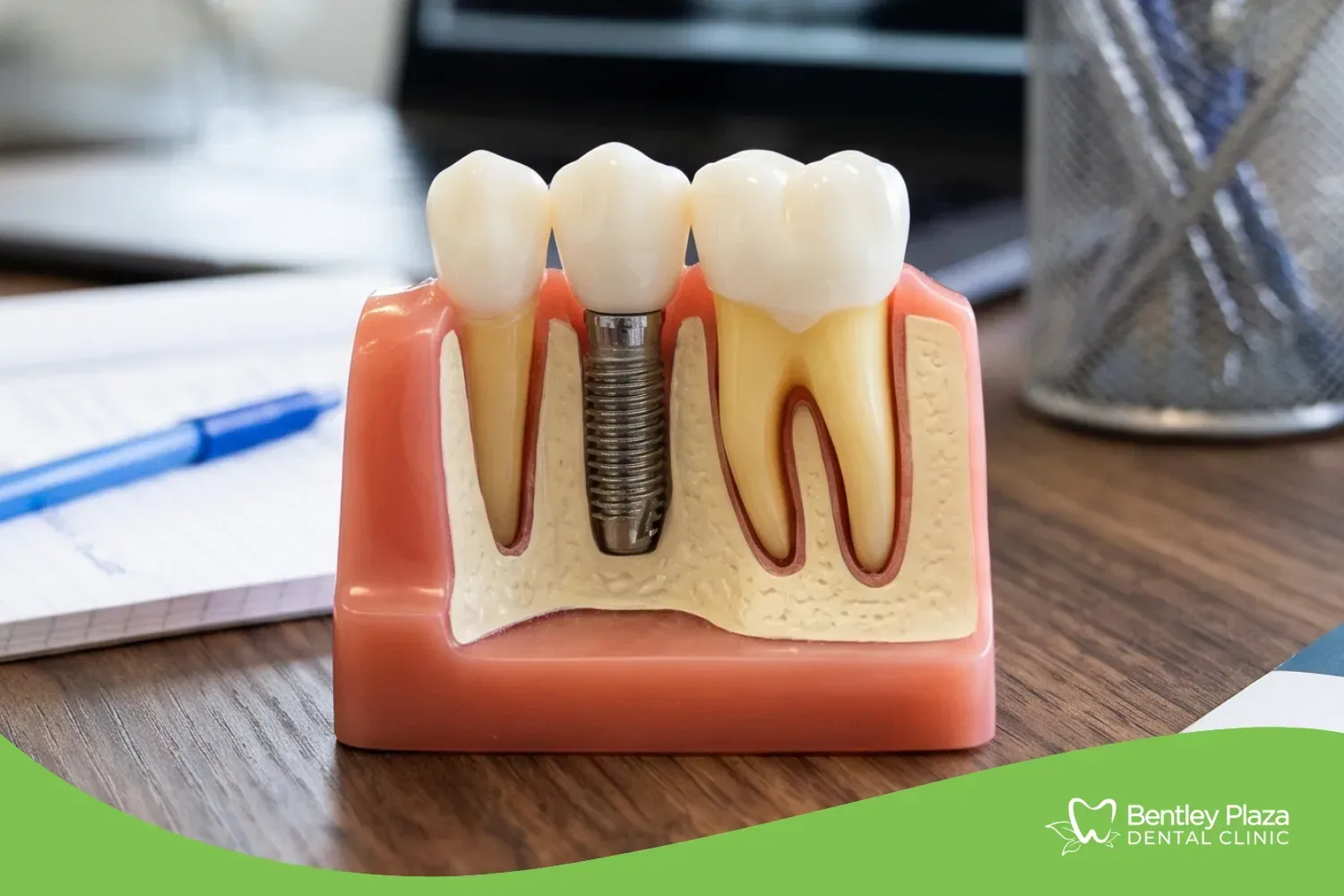
A dental implant procedure is a series of appointments that replaces a missing tooth in three parts: a post, an abutment, and a crown. The post takes the place of the tooth root, and your dentist places it in the jawbone. The abutment is the connector between the post and the crown, and the crown is the visible replacement tooth.
The post is a screw that is usually made of titanium, although some posts are made of zirconia. You can have a single implant to replace one tooth or several implants to replace multiple teeth. This guide follows a single implant with a crown. For one missing tooth, see our single tooth implant page.
Who Is Suitable for a Dental Implant?
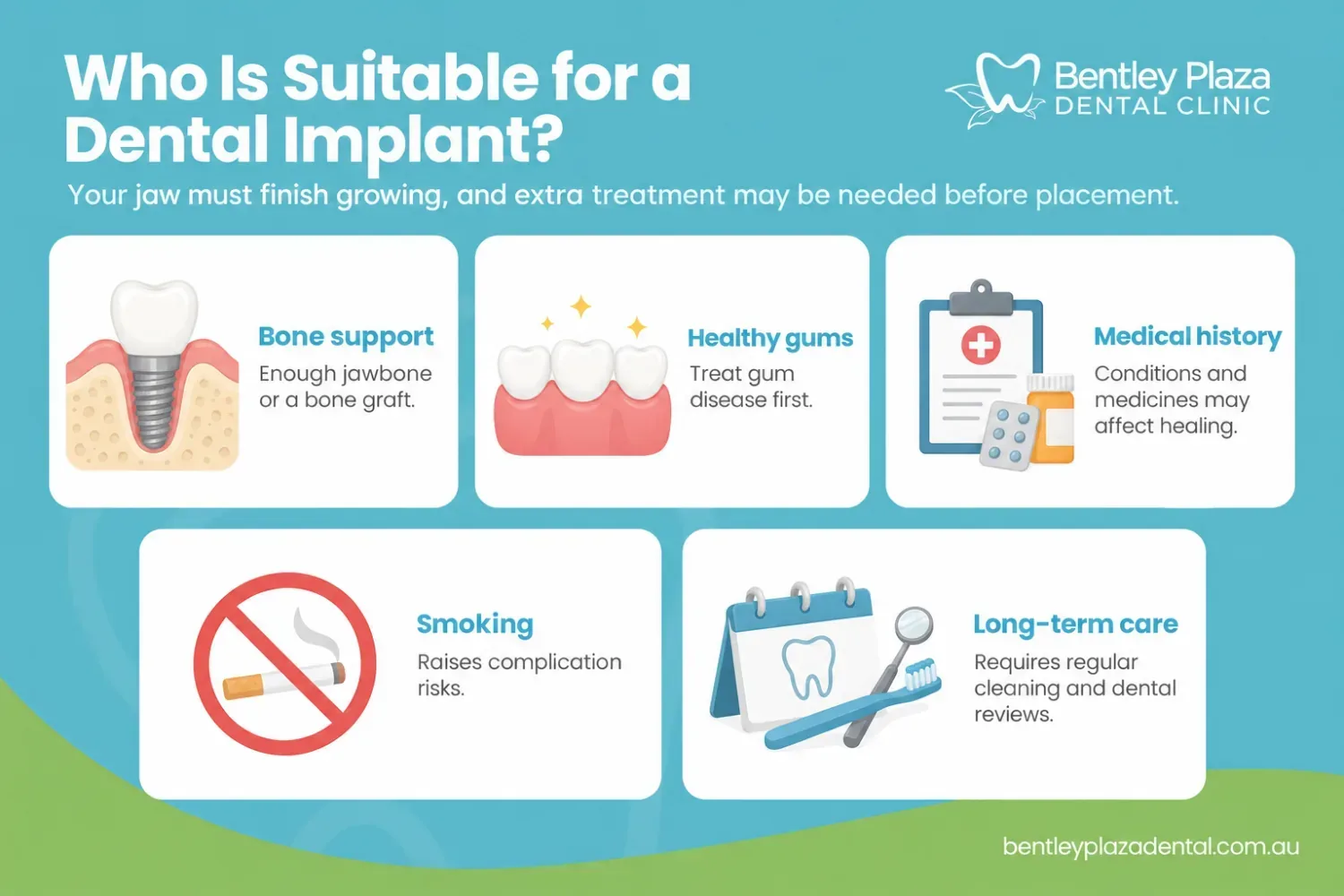
Not everyone is suitable for a dental implant, and some people need extra treatment first. Your jaw must have finished growing, and your dentist checks the following factors before recommending placement:
Bone support: Your dentist checks that you have enough bone to hold the implant. If not, you may need a bone graft first.
Gum health: Gum disease needs treatment before an implant becomes an option.
Health history: Conditions such as diabetes or osteoporosis, and some medicines, can affect healing and the risk of complications.
Smoking: Smoking can raise the risk of infection and other complications.
Long-term care: Regular cleaning and dental reviews remain part of caring for an implant.
What Happens at Each Stage of the Dental Implant Procedure?
The treatment follows six stages, with healing periods between the surgical and restorative appointments. Your dentist may combine some stages or skip others, depending on your assessment and individual circumstances.
Stage
What happens
Stage 1: Consultation and planning
Your dentist examines your mouth, reviews your medical history, and prepares your treatment plan and written, itemised quote.
Stage 2: Preparation, if needed
An extraction, bone graft, or sinus lift treats existing problems or builds up bone support.
Stage 3: Dental implant surgery (placing the implant)
Under local anaesthetic, your dentist places the post in the jawbone.
Stage 4: Healing and osseointegration
The jawbone bonds with the implant over several months.
Stage 5: Abutment and impressions
Your dentist attaches the abutment and records the implant's position for the crown.
Stage 6: Final crown and review
Your dentist fits the crown and checks your bite.
Stage 1: Consultation and planning
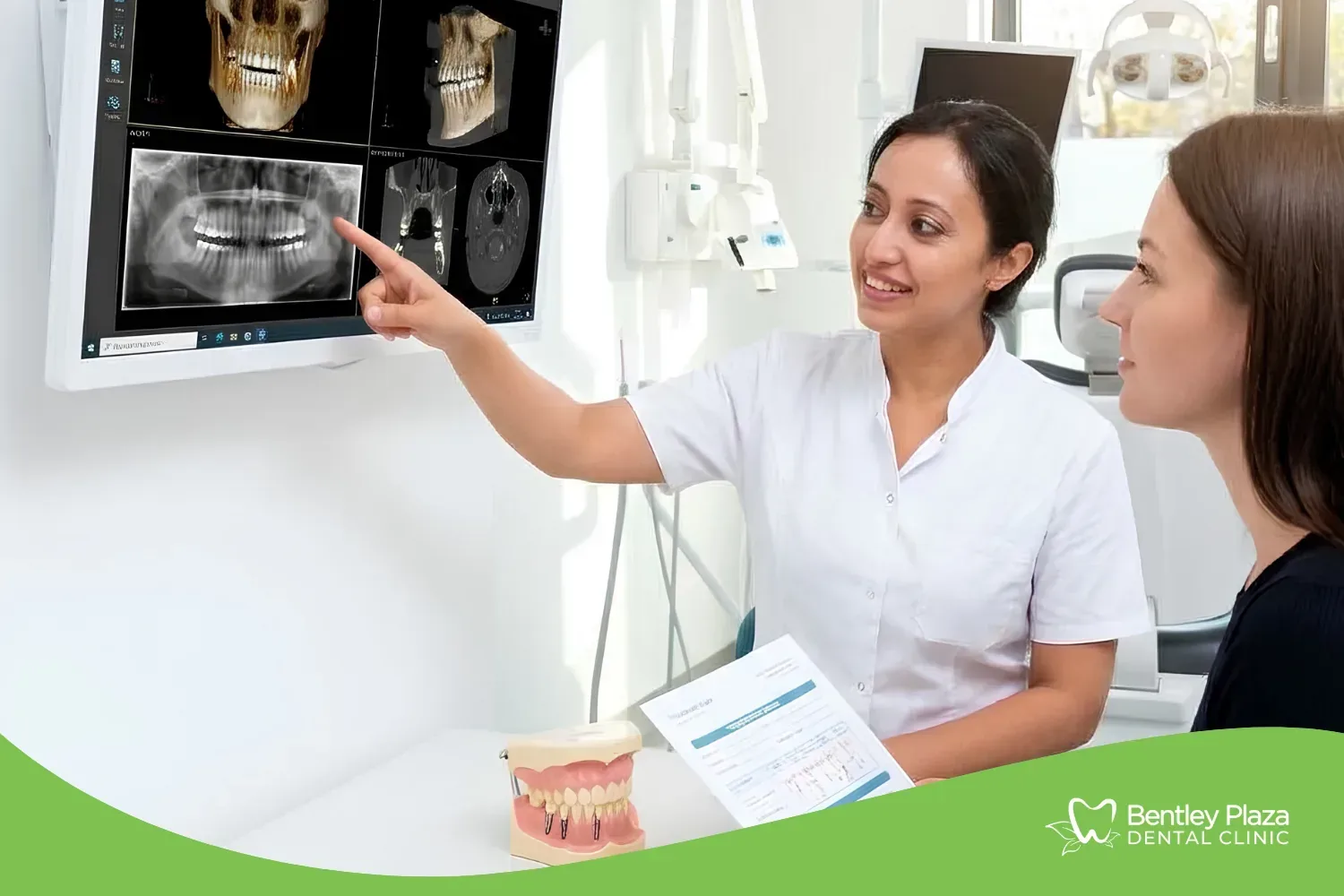
At your first appointment, we examine your mouth and review your medical history. Dental X-rays show us the bone support and nearby teeth. Tell us about any medications you are currently taking and any concerns you have about treatment. Many people feel nervous about implant surgery, so ask us anything you want to know. You won’t be judged for asking questions, and we will explain each stage in depth before you decide.
Your dentist uses these findings to plan where the implant will sit and the crown it will support, then gives you a written, itemised quote after your consultation. You'll discuss the proposed sequence and any extra procedures before you agree to go ahead.
Stage 2: Preparation, if needed
Preparation treats existing problems or builds up bone support before your dentist places the implant. Possible steps include the following:
Extraction: Removing a damaged tooth clears the site for a replacement.
Bone graft: Bone or bone-substitute material increases the bone available to support the implant.
Sinus lift: Your dentist raises the sinus lining to make room for a bone graft beneath it, in the back of the upper jaw.
A sinus lift may be needed when there isn't enough bone beneath the sinus, the air-filled space above your upper back teeth. Preparation can add separate appointments and several months of healing.
Stage 3: Dental implant surgery (placing the implant)
Your dentist uses local anaesthetic, an injection that numbs the treatment area, before preparing a space in your jawbone and placing the post. The gum is then closed with stitches where needed. You may notice numbness until the anaesthetic wears off. Before you leave, your dentist will explain wound care and your healing check-ups.
Sedation is medication that helps you feel relaxed and calm during treatment. If you feel anxious, tell your dentist, who can explain which sedation options, if any, suit you and are available at the clinic.
Stage 4: Healing and osseointegration
Osseointegration is the process in which your jawbone bonds with the implant. Bone typically takes 3 to 6 months to grow around an implant. Healing depends on your bone quality, the implant site, and any grafting, so your dentist will confirm your healing timeline.
At check-up appointments, your dentist checks your healing before deciding when the implant can support the final crown. Soreness in your gums may settle before the bone has finished bonding.
Stage 5: Abutment and impressions
Your dentist may attach the abutment when placing the implant or at a later appointment. If the gum needs to be reopened, you may have another short period of gum healing. Your dentist then takes impressions, or moulds, to record the implant's position, and the dental laboratory uses these records to make your crown.
Stage 6: Final crown and review
Your dentist fits the final crown onto the abutment and checks your bite. Your dentist will then schedule ongoing check-ups around your needs. If an implant feels loose or painful, contact your dentist straight away rather than waiting for a routine appointment.
How Long Does a Dental Implant Take?
A dental implant usually takes several months from your first consultation to the final crown, mostly because of the healing time between stages. Extractions, bone grafts, or a sinus lift can lengthen the schedule, so ask your dentist for a timeline that shows healing periods alongside your appointments.
What Is Recovery Like After Dental Implant Surgery?
After implant surgery, you may experience some pain, swelling, bruising, or bleeding from the gums. The gum settles sooner than the bone, which takes months to bond with the implant.
Follow your dentist's personalised aftercare instructions, especially after extractions or grafting. Your recovery plan should cover the following areas:
Food: Eat soft foods such as yoghurt, mashed potato, scrambled eggs, or soup for as long as your dentist recommends.
Cleaning: Your dentist will advise how to clean near the wound. Methods may include a mouthwash, gentle rinsing, or a soft toothbrush, depending on your situation.
Pain relief: Follow your dentist's advice, which takes your health and current medicines into account.
Time off work: Ask your dentist how much time to take off work. It depends on the type of work you do, whether you need extra procedures such as a bone graft, and how your recovery goes.
Follow-up appointment: Attend your follow-up appointment so your dentist can check how the area is healing. If your stitches don’t dissolve on their own, your dentist will remove them at this visit or a later one.
Contact your dentist if pain or swelling gets worse in the days after surgery. If bleeding doesn’t stop after you follow your dentist’s aftercare instructions, call the clinic straight away. If you can’t reach us, go to your nearest hospital emergency department.
What Are the Risks of a Dental Implant?
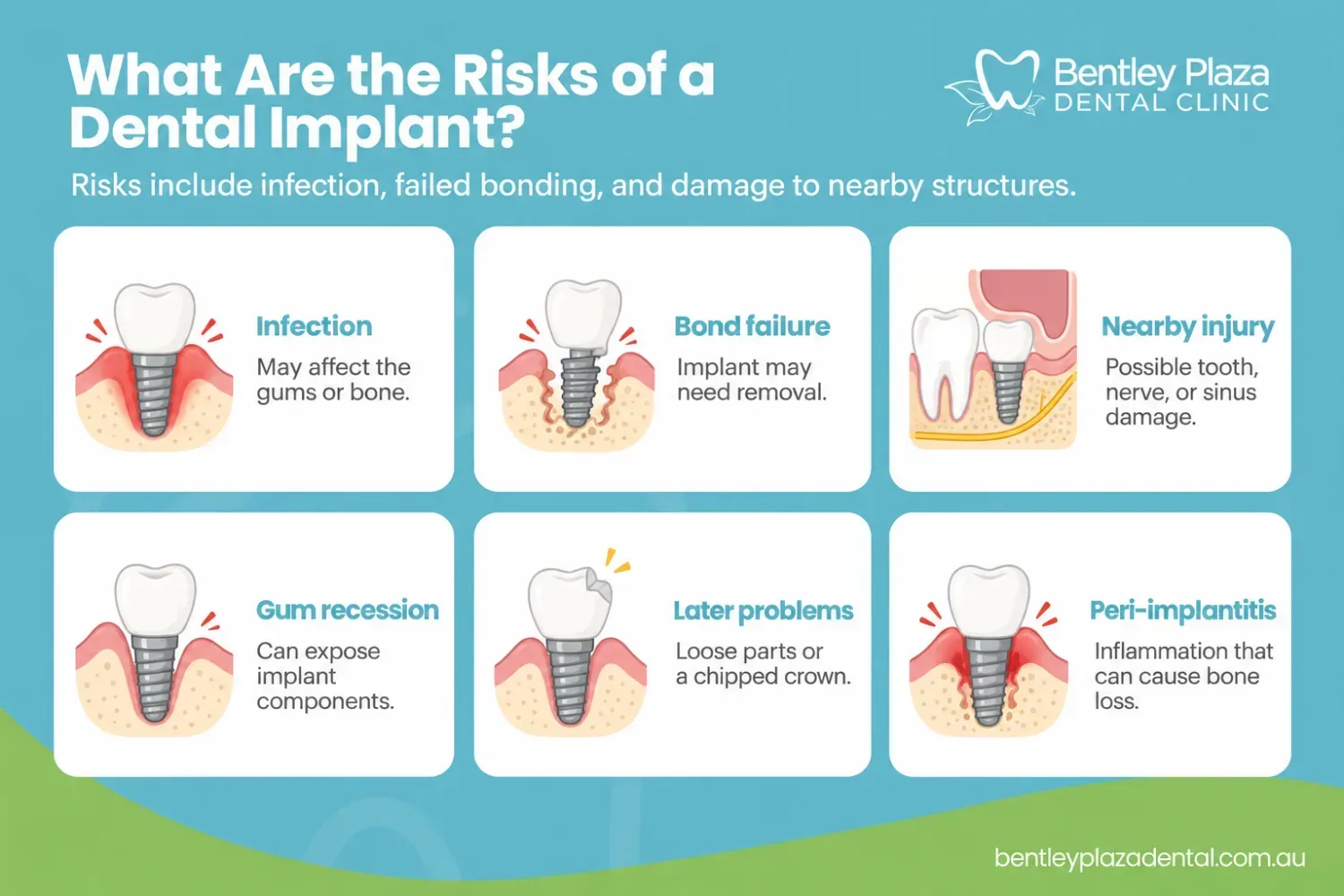
The main risks of a dental implant include infection, the implant not bonding with the bone, and damage to nearby tooth structures. Your dentist will explain how these possible risks of dental implants apply to you.
Infection: Infection can affect the gum or bone and may need further treatment.
Bond failure: An implant may not join with the bone and may need to be removed.
Nearby injury: Placement can damage neighbouring teeth or nerves, which may cause numbness. Treatment in the upper jaw can also affect the sinus.
Gum recession: The gum can pull back and expose more of the implant's components.
Later problems: Components can loosen, and the crown may chip or need repair.
Peri-implantitis is inflammation of the gum and bone around an implant. If it isn't treated, it can lead to loss of supporting bone and, eventually, removal of the implant. Have any swelling or inflammation around an implant checked early.
Disclaimer: Any surgical or invasive procedure carries risks. Before proceeding, you should seek a second opinion from an appropriately qualified health practitioner.
What Affects the Cost of a Dental Implant in Perth?
The cost of a dental implant depends on the number of implants, any preparation you need, and the materials used for your replacement tooth. X-rays, extra scans, laboratory work, and the crown's type and material also affect the price. An extraction or bone graft adds work beyond placing the implant itself.
Your dentist will give you a written, itemised quote after your consultation. Check whether it includes the implant components, the crown, and any preparation, and ask which follow-up appointments the quote covers.
What Should You Ask Before Starting Your Dental Implant Procedure?
Ask about suitability, alternatives, and aftercare before you agree to treatment. Your dentist should discuss alternatives such as a bridge or denture, and whether leaving the gap without replacing the tooth is an option for you.
Ask the following:
Recommendation: Why does an implant suit my situation, and what alternatives should I consider?
Treating team: Who will place the implant and fit the crown?
Preparation: Which, if any, extra procedures do I need before implant placement?
Personal risks: What are my risks, and what happens if the implant fails?
Written plan: What does my quote include, and who do I contact if I have a concern after treatment?
Booking a Dental Implant Consultation
The dental implant procedure involves several appointments, with healing time between stages. For a personal assessment and a written, itemised quote, book a consultation for dental implant treatment at Bentley Plaza Dental Clinic. Book online or call (08) 9466 3600. We're in Bentley Plaza Shopping Centre on Albany Highway, about 10 km south-east of the Perth CBD.
Common questions
FAQs
Does getting a dental implant hurt?
Your dentist uses local anaesthetic so the area is numb during treatment. Some tenderness afterwards is normal, and it can start as the anaesthetic wears off. Tell your dentist about any concerns beforehand so that they can explain pain management and recovery for your situation.
Can an implant be placed immediately after an extraction?
In some cases, your dentist can place an implant at the same appointment as the tooth removal, depending on the condition of the site. Your dentist assesses whether immediate placement suits your mouth or whether you should wait for the site to heal first.
Will I have a gap while the implant heals?
In some cases, a temporary tooth can fill the gap while your implant heals. Your dentist will confirm which temporary options, if any, suit your planned treatment.
How long does it take to get All-on-4 dental implants?
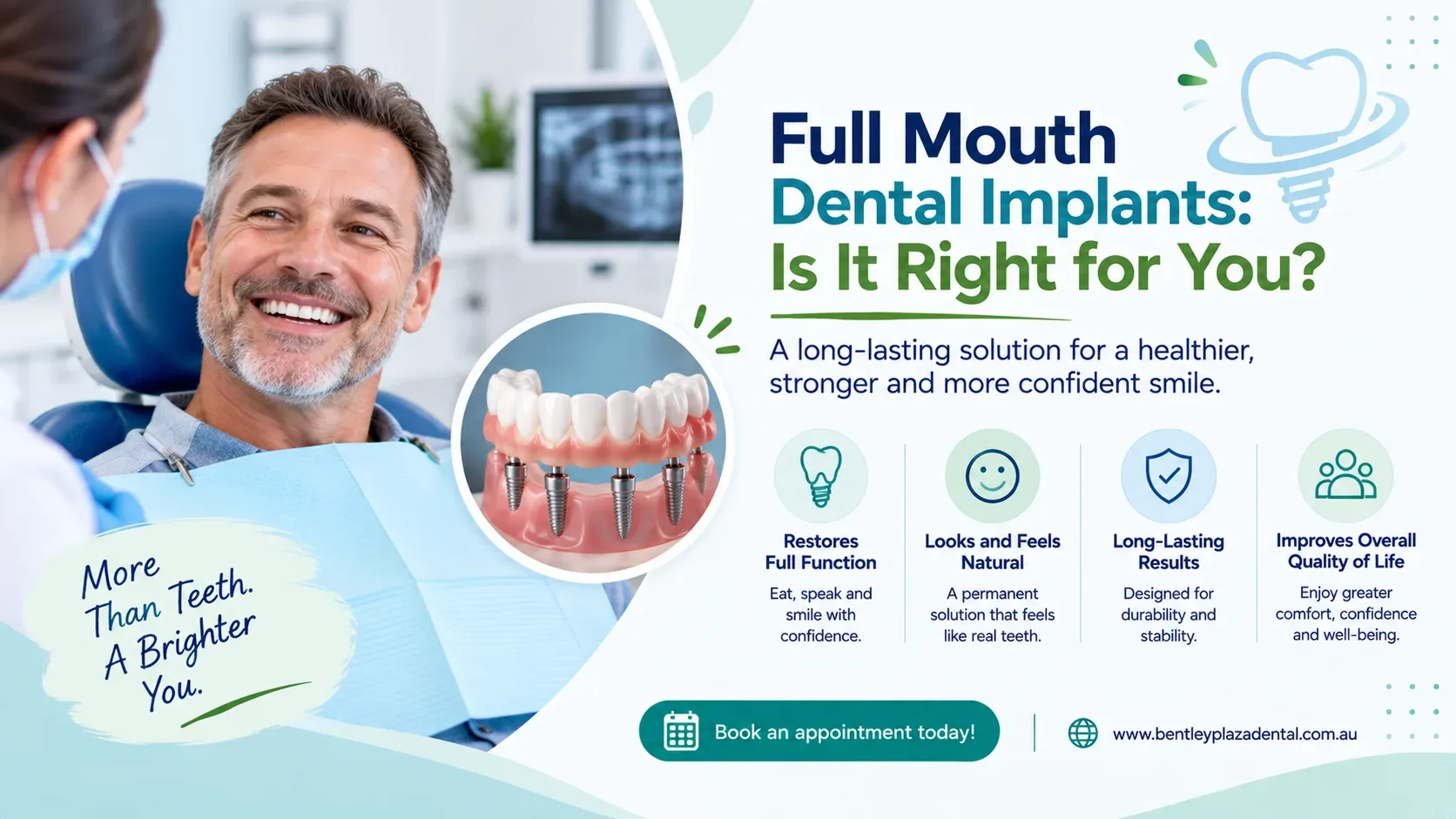
In some cases, a temporary bridge, which is a connected set of replacement teeth, can be fitted on the day of surgery. Your dentist will confirm if this suits you. The final bridge follows once your bone has healed, which can take several months. Our guide to full mouth dental implants explains more.
Can I remove an implant crown for cleaning?
No, a fixed implant crown is attached to the implant, so you can't remove it yourself. You should brush your teeth and gums twice a day and clean between the implant and your other teeth with floss, interdental brushes, or a water flosser. Your dentist can show you how to clean around fixed replacement teeth.
This article is general information only. It is not a substitute for advice about your own mouth. Talk to your dentist about what suits you.