.png)
.png)

September 24, 2026
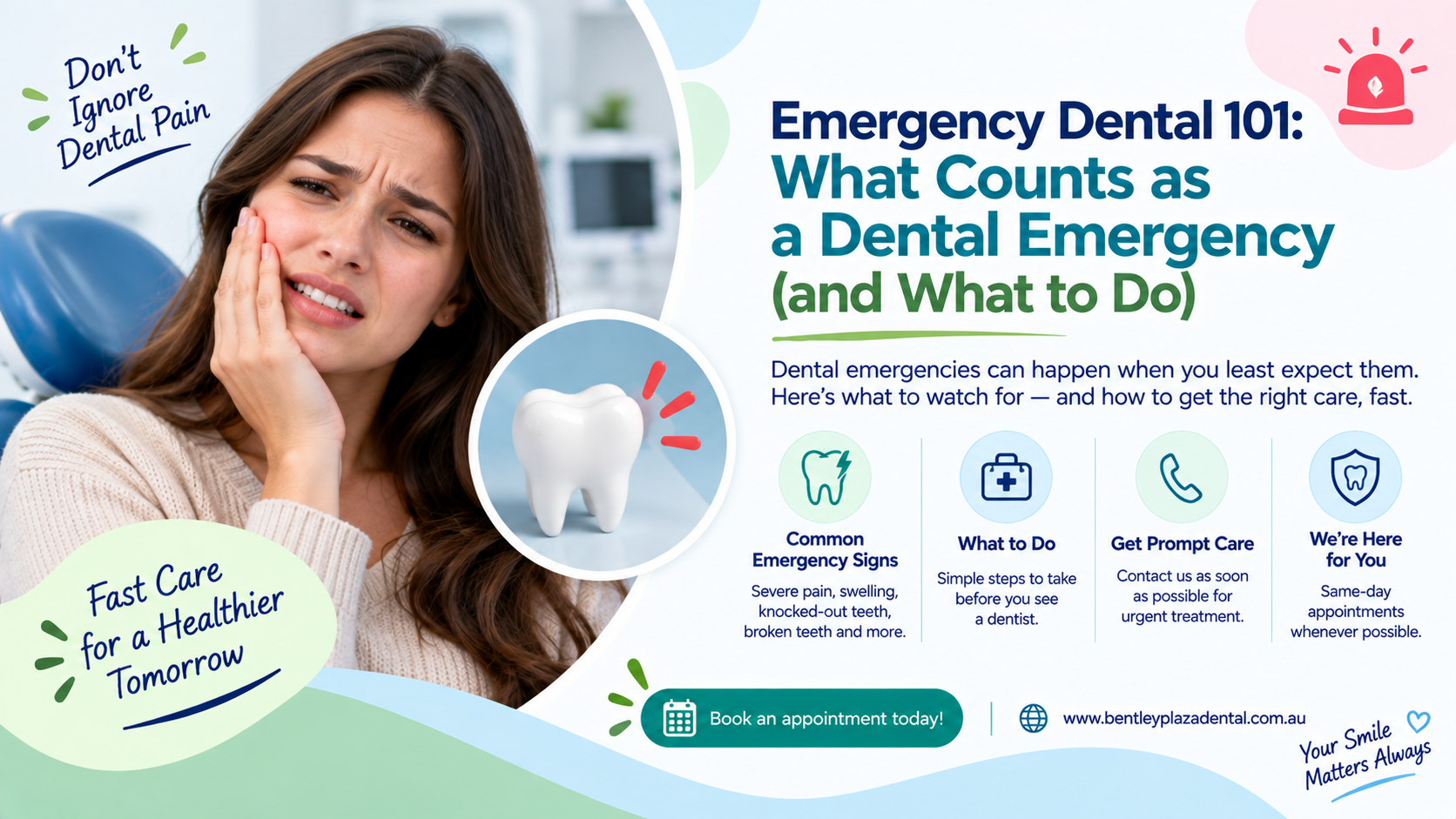
Emergency Dental 101: What Counts as a Dental Emergency (and What to Do)
Learn how to recognise a real dental emergency and what to do before you can see a dentist.


Learn how to recognise a real dental emergency and what to do before you can see a dentist.
Not every dental issue is an emergency, but some genuinely can't wait — and knowing the difference helps you respond quickly when it matters, rather than losing time deciding whether to call.
Generally, a dental emergency involves severe pain, uncontrolled bleeding, a knocked-out or badly broken tooth, or signs of a serious infection. Specifically, this includes:
Mild sensitivity, a small chip with no pain, or a loose filling with no discomfort can typically wait for a regular appointment rather than an emergency one — though they shouldn't be ignored indefinitely either.
Dental emergencies tend to get more complicated, not less, the longer they're left. A knocked-out tooth that could have been saved within the first hour may not be salvageable a few hours later. An infection that starts small can spread and become far more serious if untreated. Acting promptly generally means a simpler, less invasive treatment.
If you're dealing with a dental emergency, don't wait to see if it settles on its own. Call us on (08) 9466 3600 for same-day emergency appointments, or visit us at Shop FS6B, 1140 Albany Hwy, Bentley WA 6102.
This information is general guidance and isn't a substitute for professional care. If you're experiencing a medical emergency (such as severe swelling affecting breathing), seek immediate emergency medical attention.