.png)
.png)

August 20, 2026
Teeth Whitening: Your Complete Guide | Bentley Plaza Dental Blog
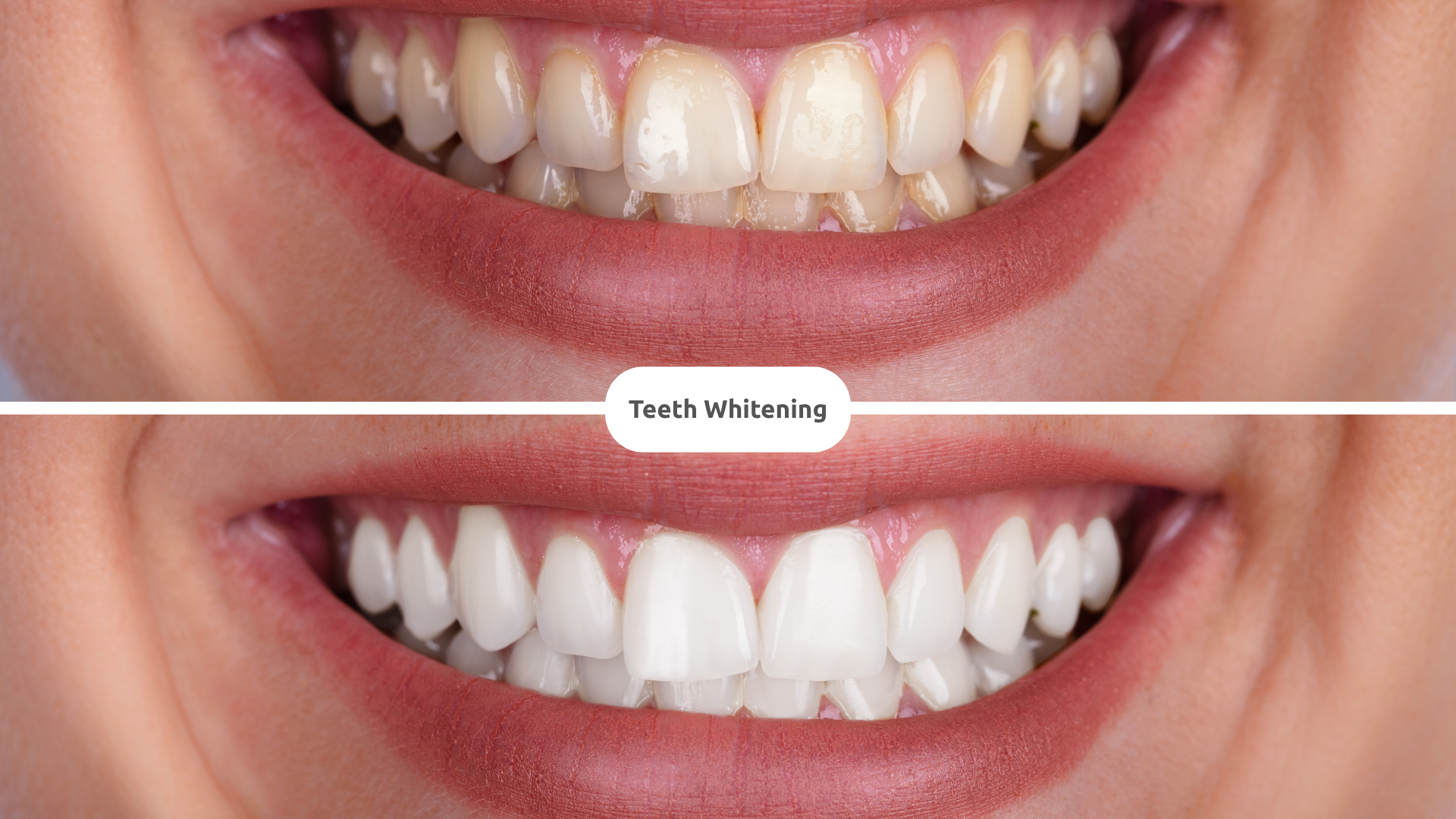
Professional teeth whitening lightens your smile safely, with results that last far longer than DIY kits.


Professional teeth whitening lightens your smile safely, with results that last far longer than DIY kits.
A brighter smile is one of the simplest ways to look and feel more confident — and professional teeth whitening remains one of the most popular cosmetic dental treatments for achieving it. Whether your teeth have dulled over time from coffee, tea, or red wine, or you're just looking for a refresh before a big event, understanding how whitening actually works helps you get safer, longer-lasting results. Join us as we walk through how teeth whitening works, what your options are, what to expect during treatment, and how to protect your results afterwards, with guidance from our Team.
Teeth naturally darken over time, and it usually comes down to two types of staining. Extrinsic stains sit on the surface of the enamel and come from everyday habits — coffee, tea, red wine, dark sauces, and smoking are the most common culprits. Intrinsic staining happens deeper inside the tooth, often as a result of ageing, certain medications, or excess fluoride exposure during childhood.
Extrinsic stains generally respond very well to professional whitening, since the treatment works by breaking down the pigment molecules trapped on and just beneath the enamel surface. Intrinsic staining can be more stubborn and may need a different approach, which is exactly why a dental consultation before you start is so useful — it helps set realistic expectations for your specific teeth.
Professional whitening treatments use a peroxide-based gel — typically hydrogen peroxide or carbamide peroxide — applied directly to the teeth. As the peroxide breaks down, it releases oxygen molecules that penetrate the enamel and break apart the compounds responsible for staining. This is a chemical process, not an abrasive one, which is why professional whitening doesn't wear away or damage healthy tooth structure when it's carried out correctly and under dental supervision.
The concentration of peroxide, and how long it's left in contact with the teeth, determines how dramatic and how fast the results are — which is also why professional, dentist-supervised whitening tends to be both more effective and safer than over-the-counter alternatives you apply yourself without guidance.
In-chair whitening is carried out at the dental clinic in a single appointment. A higher-concentration whitening gel is applied to the teeth, often activated with a special light, and the results are typically visible immediately after the session. This is the option many patients choose when they want a fast, noticeable result — for example, ahead of a wedding or an important event.
Because it's performed under direct professional supervision, your dentist can protect your gums and soft tissue throughout the process and monitor for sensitivity in real time, adjusting the treatment as needed.
The alternative is a custom take-home kit. Your dentist takes an impression of your teeth to create trays that fit your mouth precisely, then provides a professional-strength whitening gel to use at home over one to two weeks, worn for a set number of hours each day as instructed.
Custom trays tend to produce more even, consistent whitening than shop-bought whitening strips or generic trays, simply because they fit snugly against every tooth rather than leaving gaps where the gel can't reach. Many patients also appreciate being able to whiten on their own schedule.
There's no single "better" option — it depends on your goals, your budget, and your timeline. If you want the fastest possible result for a specific date, in-chair whitening usually wins. If you'd prefer a more gradual result you can manage yourself, or you want to top up your results every few months, take-home trays are usually more practical and cost-effective over time. Many patients actually combine both — an in-chair session for an initial boost, followed by occasional take-home top-ups to maintain it.
Before any whitening treatment begins, your dentist will check that your teeth and gums are healthy enough for the procedure. Whitening isn't recommended over untreated cavities, exposed roots, or active gum disease, since the whitening gel can cause irritation or discomfort in these areas. This visit is also the time to discuss your shade goals and get a realistic picture of what result to expect, since whitening lightens your natural tooth colour — it won't change the shade of existing crowns, veneers, or fillings, which is worth knowing if you have any visible restorative work.
For in-chair whitening, your dentist will protect your gums and soft tissue before applying the whitening gel to your teeth. The gel is left on for a set period, sometimes reapplied in stages, with an activating light used in some systems to accelerate the reaction. The full session typically takes around an hour.
For take-home trays, your dentist will show you exactly how much gel to use and how long to wear the trays each session, since using more gel or leaving it on longer than instructed doesn't whiten faster — it just increases the risk of sensitivity.
It's common to notice some temporary tooth sensitivity to hot or cold in the first day or two after treatment, along with mild gum sensitivity if any gel came into contact with soft tissue. Both usually settle on their own within a day or two. Your dentist may recommend a sensitivity toothpaste in the days following treatment if needed.
Whitened enamel is temporarily more porous immediately after treatment, which makes it more susceptible to picking up new stains. For the first 24 to 48 hours after whitening, it's worth avoiding the foods and drinks most likely to stain — coffee, tea, red wine, dark sauces, and cigarettes — to lock in your results.
Beyond the initial 48-hour window, ordinary good habits go a long way: brushing twice a day, drinking staining beverages through a straw where practical, and rinsing your mouth with water after coffee or wine rather than letting it sit on your teeth. None of this needs to be extreme — it's simply about reducing prolonged contact time between staining pigments and your enamel.
Whitening results aren't permanent, since your teeth continue to be exposed to the same foods, drinks, and habits that caused staining in the first place. Most patients find their results last anywhere from six months to a couple of years depending on their diet and oral hygiene. If you've had custom trays made, occasional top-up sessions are usually all that's needed to refresh your shade, rather than starting the whole process over.
When performed by a dentist using professional-grade products, teeth whitening is considered safe for most adults. The main reason dentist-supervised whitening is safer than DIY alternatives is oversight — your dentist checks your teeth and gums beforehand, uses a controlled concentration of whitening gel, and can adjust or stop treatment if you experience discomfort.
Whitening itself isn't typically painful, though temporary sensitivity is a common and expected side effect, particularly for people who already have sensitive teeth. This is usually manageable and short-lived. If you're prone to sensitivity, mention this at your consultation — your dentist can adjust the treatment approach or recommend a desensitising toothpaste beforehand.
No — professional whitening doesn't remove or thin enamel. The peroxide gel works chemically to break down stain molecules rather than physically wearing away tooth structure. This is different from some abrasive whitening toothpastes, which can be more wearing on enamel with long-term, frequent use.
Whitening is generally suitable for most healthy adults, but it isn't right for everyone. It's not recommended during pregnancy or breastfeeding, and it won't work on crowns, veneers, or fillings, since these materials don't respond to whitening gel the way natural enamel does. Anyone with untreated tooth decay or active gum disease should have that addressed first. A consultation is the best way to find out if whitening is a good option for you specifically.
Shop-bought whitening strips, gels, and toothpastes generally use much lower concentrations of active ingredient than professional treatments, which is why they're available without supervision — but it also means the results are typically slower and less dramatic. Generic one-size-fits-all trays also don't fit as precisely as custom-made ones, which can lead to uneven whitening or gel leaking onto the gums. Professional whitening offers a stronger, more consistent, and better-supervised result.
If your teeth have dulled from everyday food, drink, or ageing and your gums and teeth are otherwise healthy, professional whitening is likely to be a straightforward, effective option. The best way to find out is a consultation, where your dentist can assess your teeth, talk through in-chair versus take-home options, and give you a realistic idea of the results you can expect for your specific smile.
Contact us today to book a consultation and find out which whitening option is right for you.