


Resources
Dental Bridge vs. Implant for One Missing Tooth
Explore dental bridge vs. implant options for one missing tooth and learn how your dentist assesses your neighbouring teeth, gums, and jawbone before treatment.
November 26, 2026
Read More
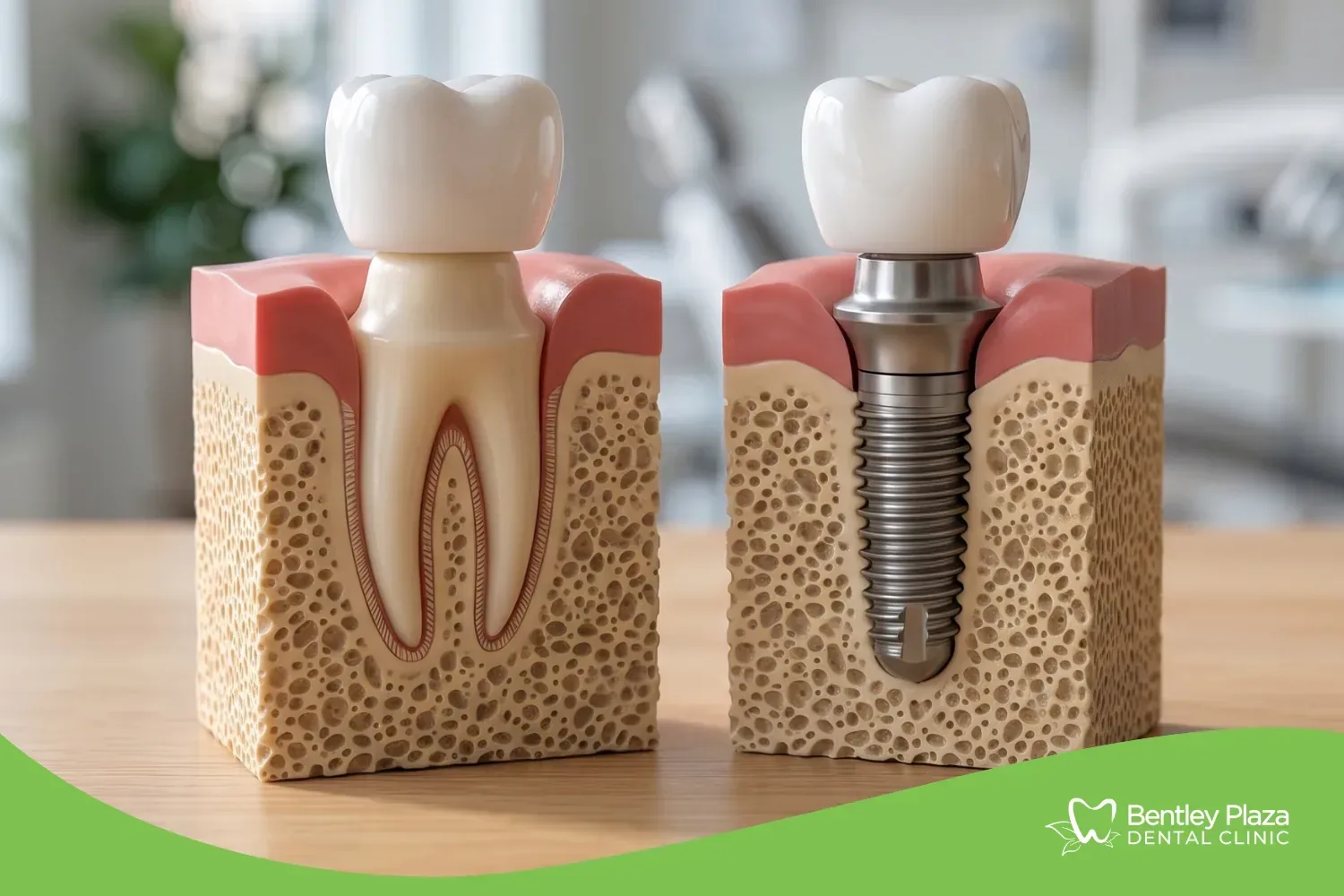
A crown covers and protects a damaged tooth that can be kept, while an implant replaces a tooth that can't be, so the crown vs. implant choice depends on an assessment of the tooth itself.
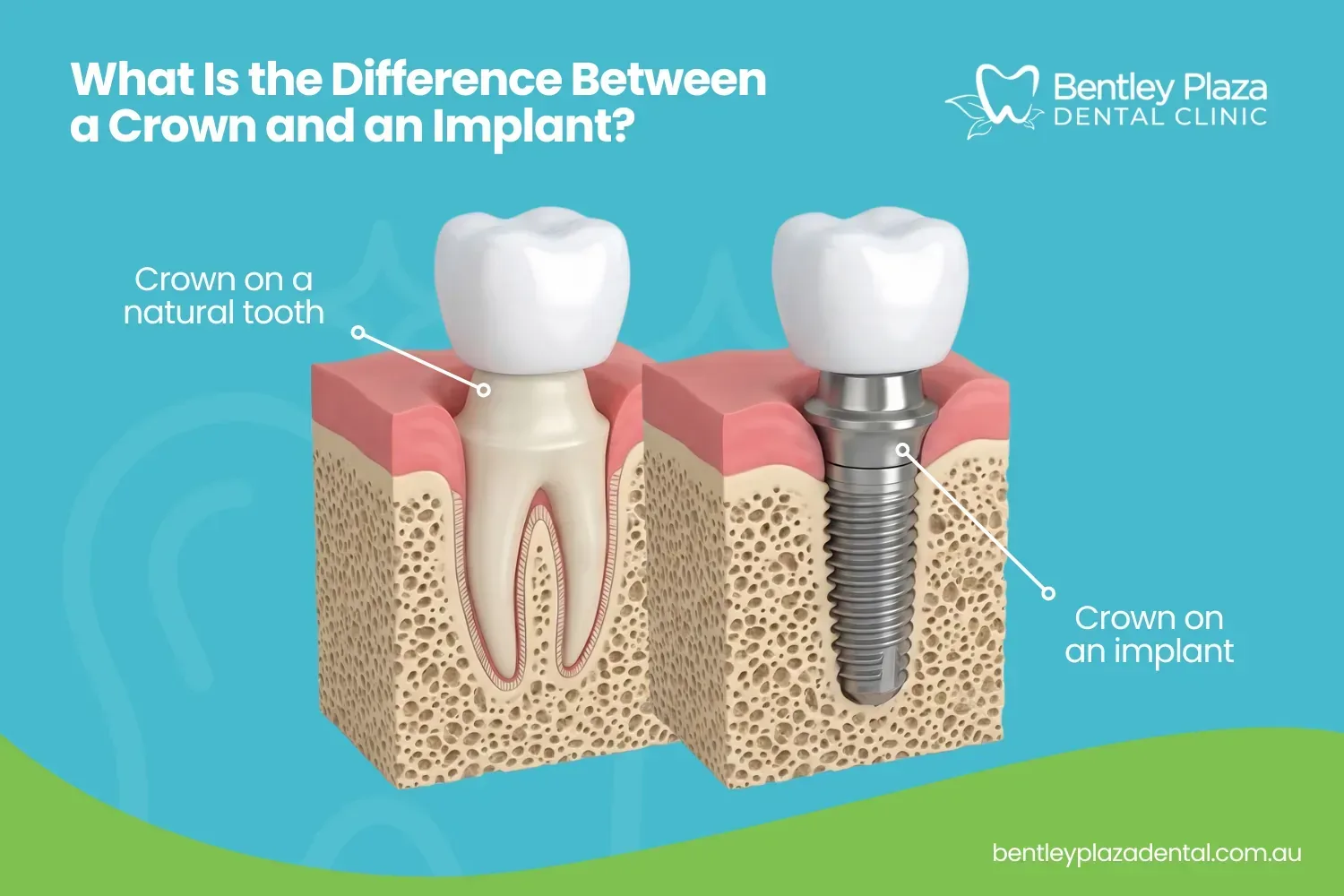
A crown is a custom-made cap that fits over a damaged tooth to restore its chewing surface, whereas a dental implant replaces the root of a missing tooth. In either treatment, the part you see above the gum is a crown.
A crown may save a damaged tooth when the root is sound and enough healthy tooth remains to support the crown. Your dentist confirms this with an examination and X-rays.
An implant may be an option when a tooth is missing or when your dentist finds too little sound tooth to rebuild. For example, decay may reach so far below the gum that the dentist can't fit the edge of a crown against the healthy tooth. A fracture that splits the root may also make the tooth unsuitable for a crown, and your dentist may recommend an implant if they expect the tooth to keep causing problems.
Before an extraction (removal of the tooth), ask your dentist to show you why the tooth can't support a crown. If you already have a gap, your dentist can assess whether there's enough bone for the implant post. A dental bridge supported by neighbouring teeth is another way to fill the gap, and we compare the two in our dental bridge vs. implant guide.
A crown protects your own tooth and usually takes around two visits, whereas an implant replaces the tooth and takes several months for the jawbone to heal around the post. Our guide to the dental implant procedure explains each stage, and your dentist confirms the healing timeline for your mouth.
Table 1: Crown vs. implant at a glance
| What to compare | Crown on your natural tooth | Single implant with a crown |
|---|---|---|
| What it treats | A tooth that still has a usable root but needs more protection than a filling can provide. | A gap left by a missing tooth or a tooth that needs removing. |
| What happens to your tooth | The dentist reshapes the tooth and takes a scan or impression for the crown. | The natural root is gone. The implant supports the new tooth independently of its neighbours. |
| Surgery | Fitting the crown itself usually requires no surgery. | The dentist places the post into the jawbone, usually under local anaesthetic. |
| Visits and healing | A temporary cap can cover the prepared tooth between appointments for a crown. At the fitting, the dentist checks your bite before securing the crown. | Bone typically grows around the post over about 3 months. A bone graft, a procedure that adds bone to the jaw, can extend the overall treatment time. |
| Care at home | Brush with fluoride toothpaste and clean between the teeth daily, including where the crown meets the tooth. | Brush at the gumline and clean beside the implant crown each day. Ask which size interdental brush (a small brush for between the teeth) fits the space. |
| Longer-term considerations | A crown can last many years with good care. Decay around its edge or a fracture in the tooth beneath it may mean further treatment. | The post and crown can need attention at different times. A chipped crown may need repair even when the post remains secure. |
Healthdirect says a crown can last for many years if it is cared for properly and describes bone growing around an implant over three months. Your dentist confirms what to expect for your mouth.
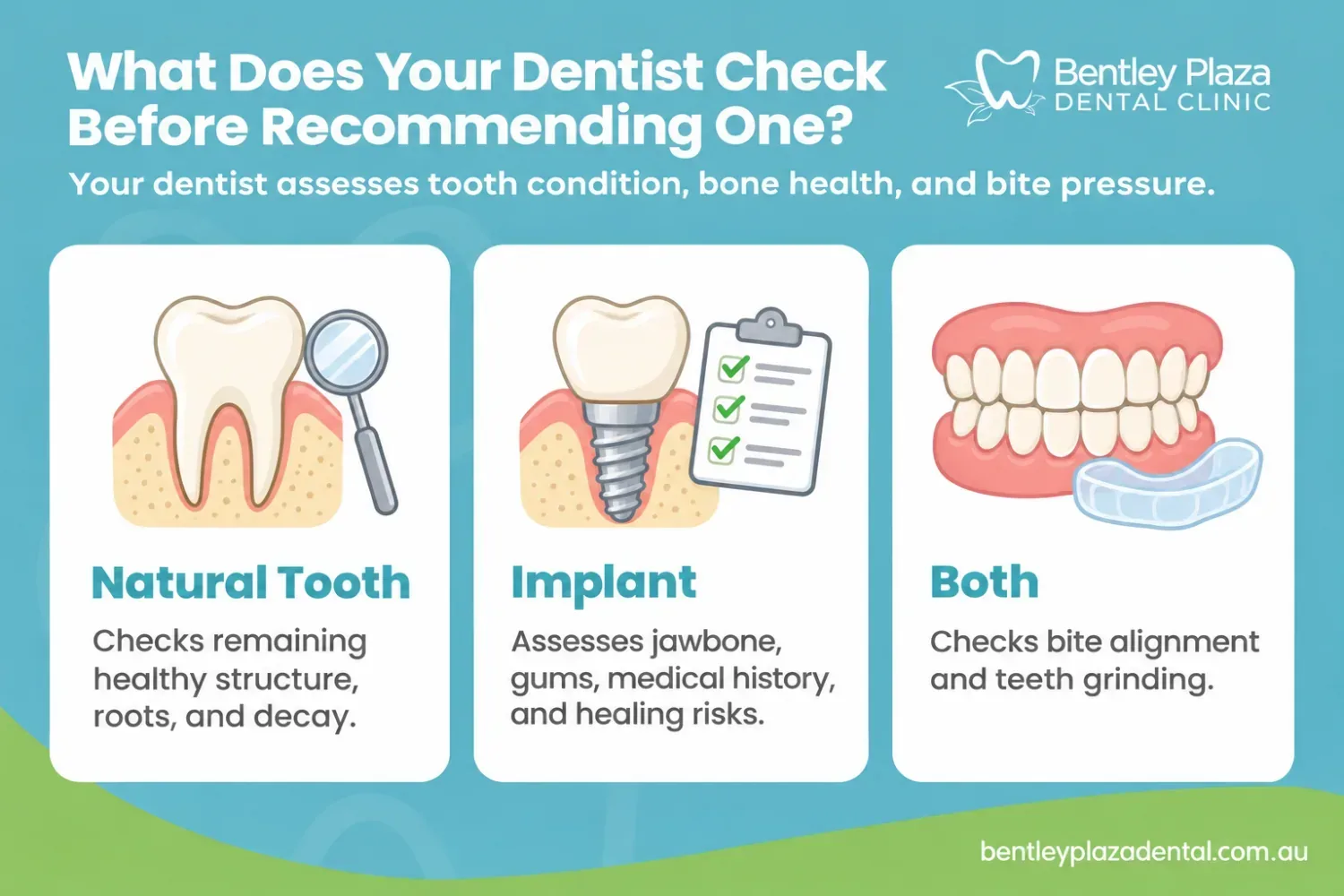
Before recommending a crown, your dentist checks how much healthy tooth remains and whether the root can support it. If you need a replacement tooth, your dentist assesses the jawbone and gums where the implant would sit.
With a crown on your own tooth, the main risks involve the tooth beneath the cap. With an implant, risks include infection at the surgical site and loss of the bone supporting the post.
Any surgical or invasive procedure carries risks. Before proceeding, you should seek a second opinion from an appropriately qualified health practitioner.
The cost depends on the crown material, any treatment the tooth needs first, and, for an implant, the scans, extraction, and bone grafting. Your dentist will give you a written, itemised quote after your consultation.
The crown vs. implant decision starts with whether your dentist can keep your natural tooth. At Bentley Plaza Dental Clinic, your dentist can examine a damaged tooth to see whether a crown could protect it. If the tooth is missing or needs removal, they can assess whether your jawbone could support an implant.
Book online or call (08) 9466 3600 to arrange a consultation at the clinic. We'll talk through whether a crown or a single tooth implant could suit you, and your dentist will give you a written, itemised quote.
Common questions
Yes, you can request copies of your dental X-rays or ask your practice to send them to the dentist giving the second opinion. For a direct transfer, provide the other practice's contact details.
Your rebate depends on your fund and level of extras covered, so ask your fund for a benefit quote. Give them the dental item numbers from your written treatment plan, and ask what they will pay for each stage, including whether a waiting period or an annual limit applies.
Whitening does not change the colour of a crown, as the Better Health Channel notes, so a porcelain crown keeps its shade while your natural teeth lighten. If you plan to whiten your teeth, tell your dentist before they choose the colour for a visible crown.
Keep the implant brand and model with the date and location of placement. If you received an implant card, keep it with your dental records. Your new dentist can use those details to identify compatible parts.
This article is general information only. It is not a substitute for advice about your own mouth. Talk to your dentist about what suits you.
Back to Top: Dental Implants vs. Crowns: Which Option Suits You?
Keep reading